Edit clutter, zone the room, use vertical storage, and pick multi-use furniture.
If you want to know how to organize a small living room efficiently, you are in the right place. I have helped many renters and new homeowners turn tight, busy rooms into calm, useful spaces. This guide breaks down the exact steps, tools, and habits I use. Follow along, and you will master how to organize a small living room efficiently without stress.

Assess the space and define zones
Start with a clear plan. Measure the room, doors, windows, and any heaters or vents. Note how natural light moves during the day. Pick a main goal for the room, like relaxing, movie nights, or hosting two friends.
Create simple zones. A zone is a small area with a job. You can use a rug, a lamp, or a shelf to mark it. Most small rooms need two to three zones at most. For example, a sofa and table for lounging, a reading corner, and a tiny desk wall.
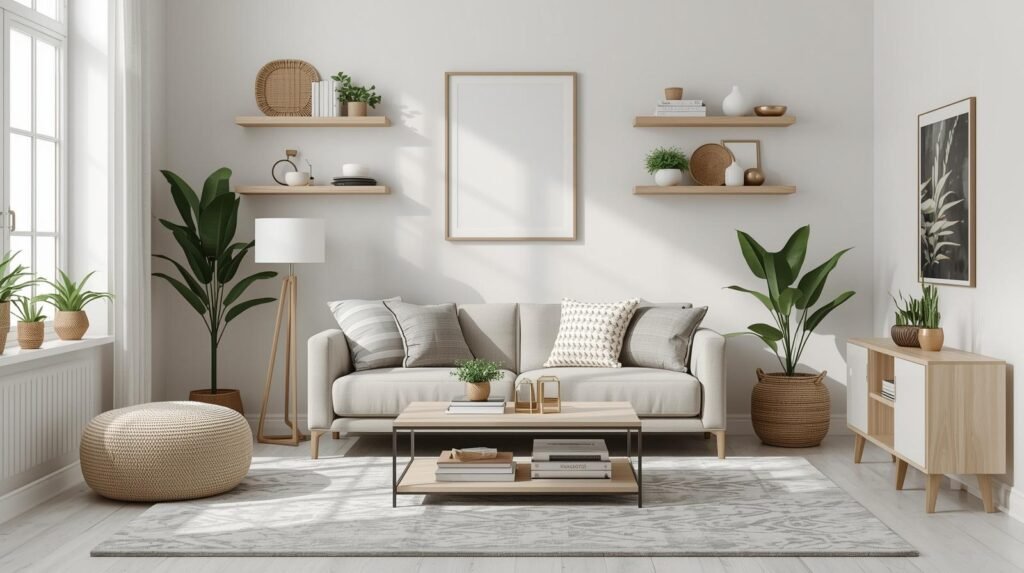
Think scale, not only style. Low-back sofas and armless chairs open up sight lines. Choose one focal point. It could be a window view, a TV wall, or a soft art piece. This keeps the eye calm and stops the room from feeling busy.
Here is how to organize a small living room efficiently at the planning stage. Keep only what fits your goals, measure twice, and use zones to guide every choice.
Where should the sofa go in a small living room?
Place it on the longest wall or across from the focal point. Leave a clear path of 30 to 36 inches for walking, even if it means a smaller sofa.
How big should the rug be?
Make sure the front legs of your main seats sit on the rug. A larger rug often makes a small room feel bigger and more pulled together.

Choose furniture that works hard
Pick pieces that do more than one job. A storage ottoman holds throws and becomes a coffee table. Nesting tables act as side tables and tuck away when not in use. A drop-leaf table shifts from desk to dining in seconds.
Mind visual weight. Leggy furniture lets light flow under it. Glass or acrylic tables feel light and keep views open. Wall-mounted shelves or a floating media unit free up floor area.
Avoid common mistakes. Do not crowd the room with many small pieces. Do not buy a deep, overstuffed sofa that eats space. Sample fabrics and test seat depth before buying. To learn how to organize a small living room efficiently, think multi-use first, then size, then style.
Is a sectional okay for small rooms?
Yes, if it is a compact L-shape with a chaise, low arms, and a tight back. Place the chaise to guide traffic, not block it.

Add smart storage that hides the mess
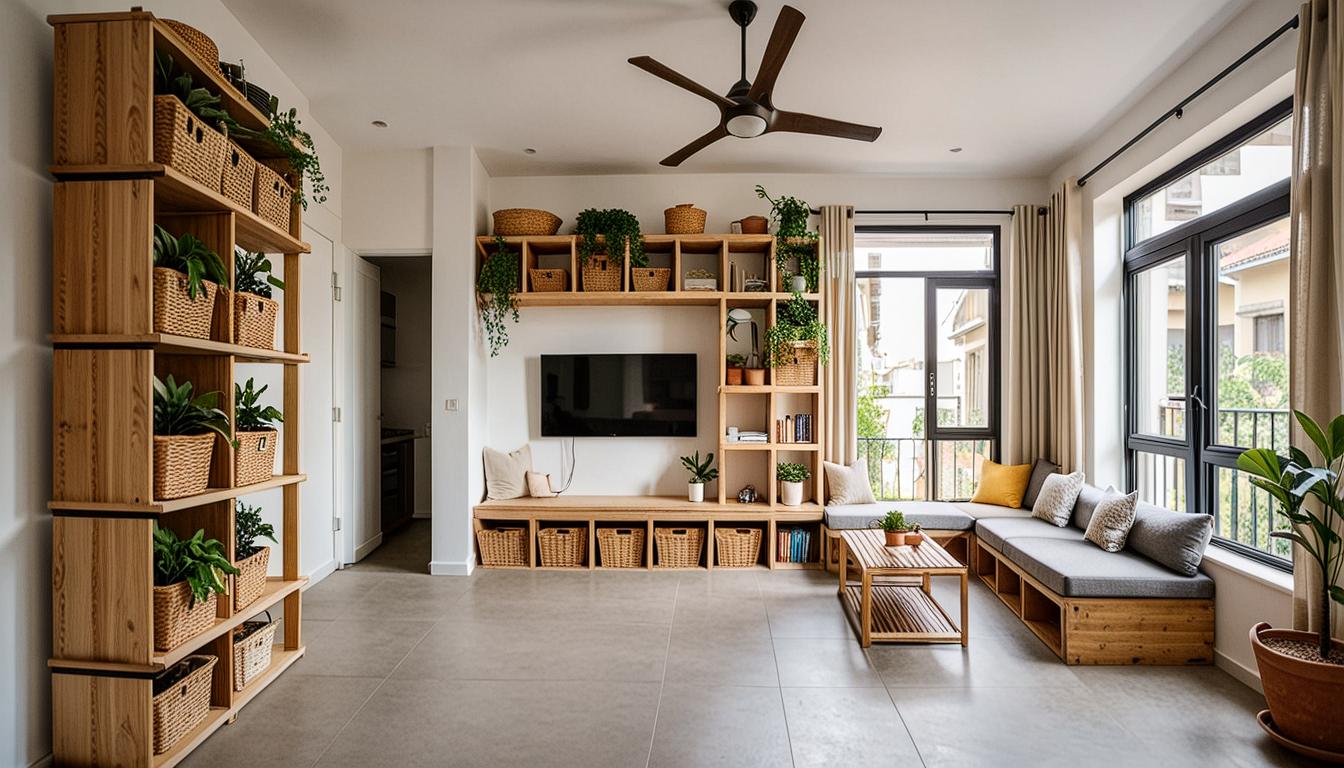
Use vertical storage to win floor space. Tall bookcases, wall cabinets, and ladder shelves draw the eye up. Put closed storage low for daily clutter, and open shelves high for display.
Choose furniture with built-in storage. A lift-top coffee table stores remotes and charges devices. A slim console behind the sofa hides cords and holds baskets. If you rent, use removable hooks and rail systems for a renter-friendly setup.
Use containers that match your style. Baskets for throws, boxes for media, and clear bins for cables. Label once and you will save time every week. This is how to organize a small living room efficiently without adding stress to your routine.
Plan layout and traffic flow
Start with a simple rule. Leave a clear path from the entry to the main seat. Aim for 30 to 36 inches of walkway. Keep 14 to 18 inches between the sofa and coffee table. Place side tables within easy reach of each seat.
Try these quick layouts:
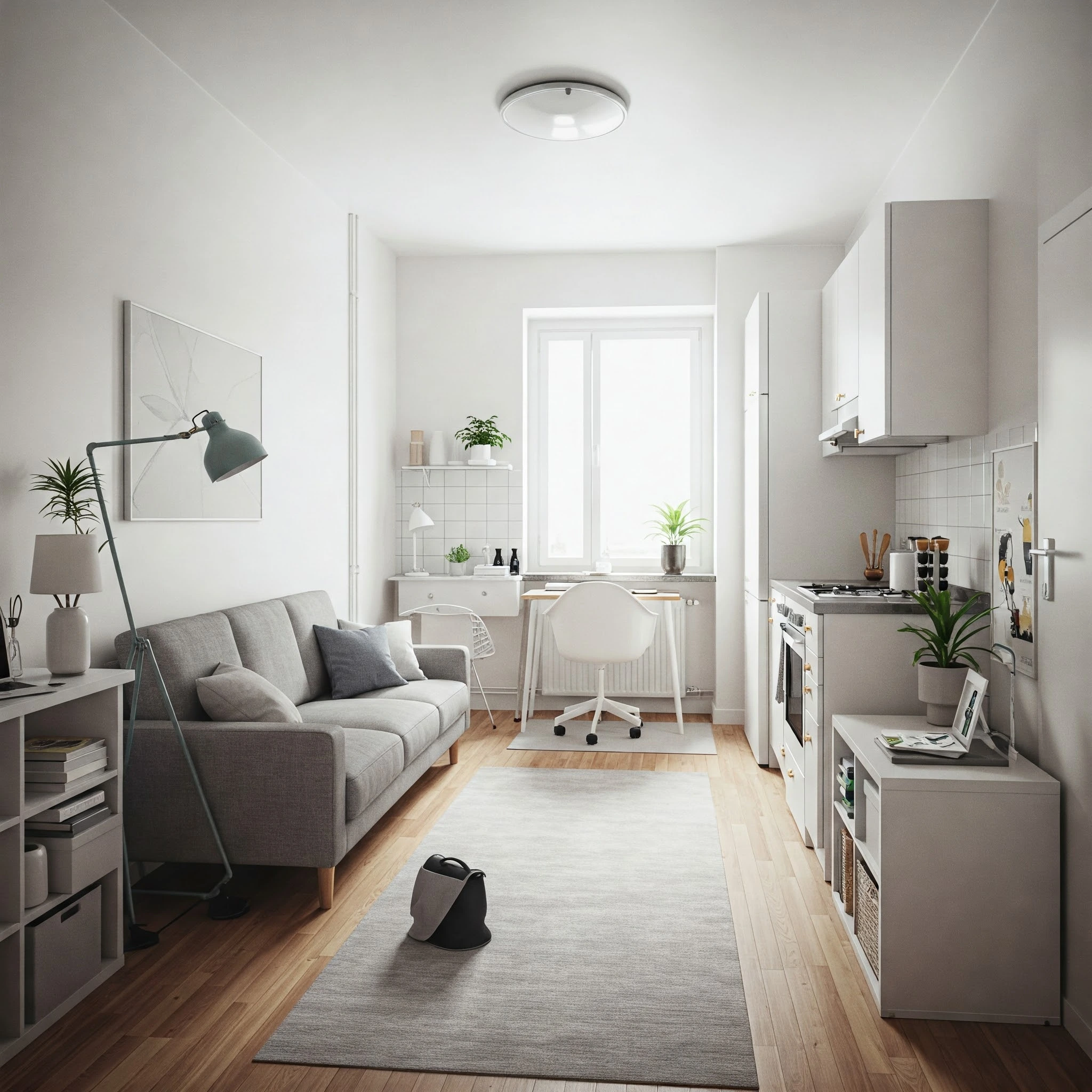
- Narrow room: Sofa on the long wall, two small chairs across, and a narrow bench under the window.
- Square room: One sofa, one chair, a round table, and a tall corner lamp to lift the eye.
- Open-plan space: Float the sofa with a console behind it to create a clear living zone.
Use rugs to define zones and control echo. Hang art at eye level. Keep lamps at varied heights for a cozy, even glow. If you ask me how to organize a small living room efficiently, I say start by mapping paths, then fit the furniture to those paths, not the other way around.

Use light, color, and visual tricks
Light colors reflect more light and feel airy. Keep walls and big pieces in soft, warm neutrals. Add deeper tones in small accents. Follow the 60-30-10 rule for color balance.
Hang curtains high and wide. This makes windows look taller. Use mirrors across from a window or lamp to double the light. A large mirror works better than many small ones in a tight space.
Layer your lighting. Use a ceiling light, floor lamp, and two table lamps. Add a wall sconce or LED strip under a shelf. To learn how to organize a small living room efficiently, plan light like furniture. Light guides mood and flow with little cost.

Tame tech and cables
Hide wires to calm the room. Use cable channels that match the wall. Mount a power strip under the console and label each plug. Coil extra cable with Velcro ties.
Hide the router in a ventilated box or a rattan basket with cutouts. Mount the TV and run cords through a paintable track. Keep remotes in a single caddy on the coffee table. This is how to organize a small living room efficiently when screens and devices multiply.

Build simple daily habits that stick
Create a 10-minute reset. Set a timer every night. Fold throws, clear the table, and return items to baskets. Small resets beat big weekend cleanups.
Give every item a home. Use one basket per person, one for mail, and one for remotes. Try a one-in, one-out rule for decor and books. That limit keeps balance.
Keep a weekly routine. Dust open shelves, sort the mail basket, and empty the hidden bin. To learn how to organize a small living room efficiently, protect the system with habits, not willpower.

Budget and shopping plan
Decide what matters most. Spend on a good sofa, a supportive chair, and a rug that fits. Save on side tables, baskets, and art frames. Shop your home first before you buy.
Buy in a smart order:
- Measure and map the layout on paper with real sizes.
- Order swatches and test colors at morning and night.
- Bring a tape measure and painter’s tape to check scale at home.
- Read return policies and delivery notes before checkout.
Thrift and mix. A vintage chair can add charm and scale. Swap hardware on a budget media unit to lift the look. This is how to organize a small living room efficiently while keeping costs in check.
Frequently Asked Questions of How to organize a small living room efficiently
What is the easiest first step?
Start with a 30-minute declutter and remove extras from surfaces. Then measure and sketch the room so each choice ties to real sizes.
How high should I hang curtains in a small room?
Hang them 4 to 6 inches above the window, or near the ceiling if possible. Extend the rod 6 to 10 inches past the window to make it look wider.
What is the best coffee table shape for tight spaces?
Round or oval tables ease traffic and reduce bumps. Nesting tables also work well since they slide away when not in use.
How do I hide a TV in a small living room?
Use a low media console with doors, or a framed TV that looks like art. You can also mount a curtain or panel to slide over the screen.
What is the simplest way to learn how to organize a small living room efficiently?
Focus on zones, then add multi-use furniture and closed storage. Keep cables tidy and do a 10-minute reset daily.
Conclusion
A small living room can feel open, calm, and useful with a smart plan. Measure, define zones, pick multi-use pieces, and build simple habits. This is how to organize a small living room efficiently and keep it that way.
Start with one step today. Tape out your layout, or try a 10-minute reset tonight. Want more tips and room checklists? Subscribe, share your room size in the comments, and I will help you map your layout.